A. L. Beard · The Trilogy
Three Novels by Alan Lindley Beard

A Trilogy
of the Baird Beard
Family

Tracing one family across one hundred and fifty years — from the linen country of northern Ireland, through the wars and clearings of colonial America, into the Greenbrier and Pocahontas counties of western Virginia.

  1. I.Under the Watch of the Rivers1718
  2. II.The Road That Ends1755 — 1800
  3. III.The Ground That Held1805 — 1870
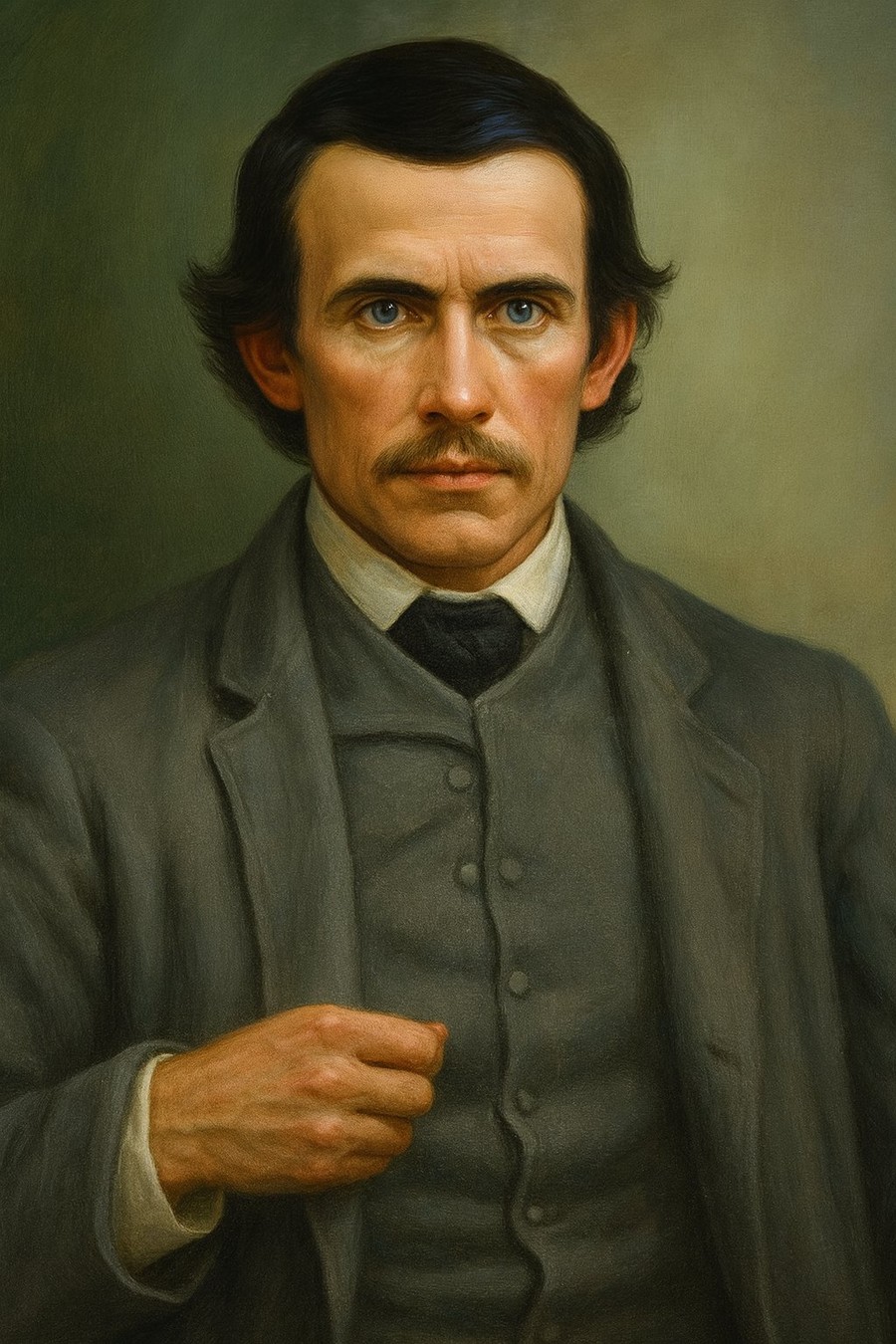
Portrait of Josiah Jonas Beard
Josiah Jonas Beard, 1792 — 1878

Hath this been in your days, or even in the days of your fathers? Tell your children of it, and let your children tell their children, and their children another generation.

Joel 1:2

One family. One hundred and fifty years. Three voices, and a fourth one underneath.

Two Irish brothers arrive in Boston in 1718 with what a family can carry and the understanding that they will not see the place again. Their descendants carry a shepherd’s crook, a farm, a name, and a secret none of them is ever told. The trilogy is historical fiction written close to the record — the places are real, the church is real, the families are real. What the books supply is what the record cannot: the private weather of the people who lived it.

Each novel stands on its own. Read in sequence, they trace the slow becoming of a country and the slower becoming of the family that helped to settle one corner of it. Edwin’s diary entries, used as epigraphs throughout all three volumes, function as a fourth narrative voice — the one that has been present from the first page and is only fully answered on the last.

I.
Book One · Ireland and the Colonies, 1718

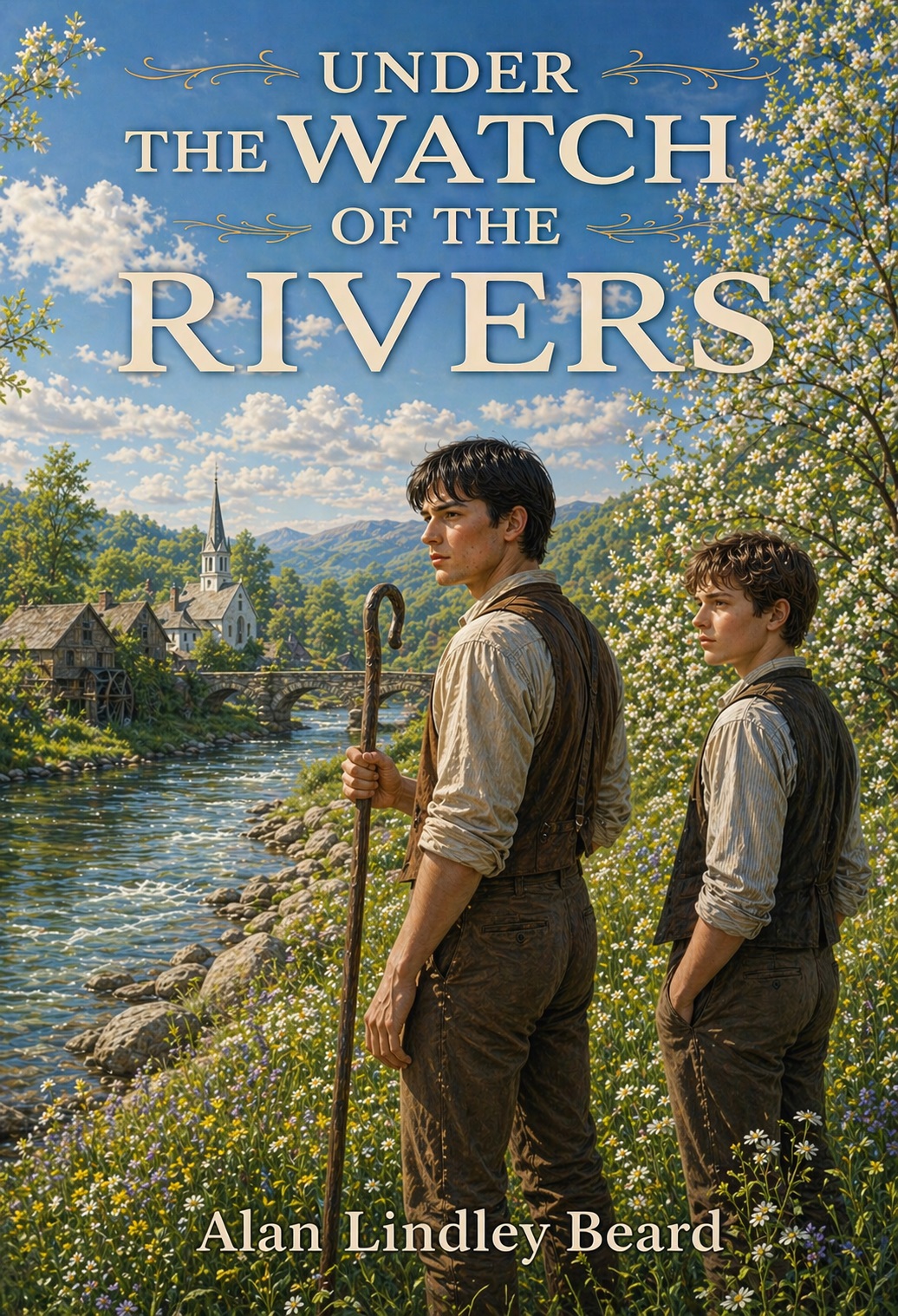
Under the Watch of the Rivers

Third-person narration · Framed from West Virginia, 1878

Thomas and Edwin Baird leave Ulster in 1718 with what a family can carry and the understanding that they will not see the place again. The novel follows the brothers in close third person — across the Atlantic, into the New England settlements, and out along the rivers that will carry the family west. A framing device dated 1878 gives the manuscript to Rachael Cameron Poage Beard, the great-granddaughter-in-law who has kept it; Edwin’s diary entries thread through the book as epigraphs, a second voice underneath the first.

The first book is a book of arrivals and of the small, irreversible decisions that make a family into whatever it is going to be. It also plants what the later books will grow — chief among them the fact, known to Edwin and to no one else, that the child raised as Thomas’s son is not Thomas’s son.

Read Chapter One
Cover of Under the Watch of the Rivers by Alan Lindley Beard
II.
Book Two · The French and Indian War — the founding of Beard

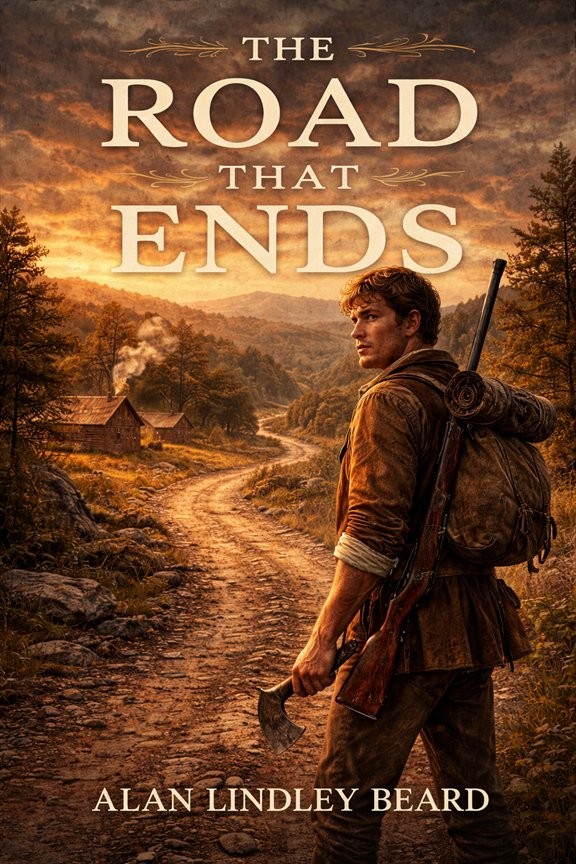
The Road That Ends

First-person narration by John Beard

John Beard tells his own story. He is Thomas’s son, so far as he knows or anyone tells him, and he comes of age on a frontier that is steadily becoming a country. The novel opens in the French and Indian War and closes a generation later with the founding of the Town of Beard on land John has helped to survey, defend, and hold.

The shepherd’s crook passes to John in this book. He does not know what the marks cut into it are, and no one living can tell him. What he inherits instead is a life of service — to his uncle Edwin, to the militia, to the neighbors who become a town — and the steady, unspoken work of becoming the man the next generation will remember.

Read Chapter One
Cover of The Road That Ends by Alan Lindley Beard
III.
Book Three · Pocahontas County, 1805 — 1870

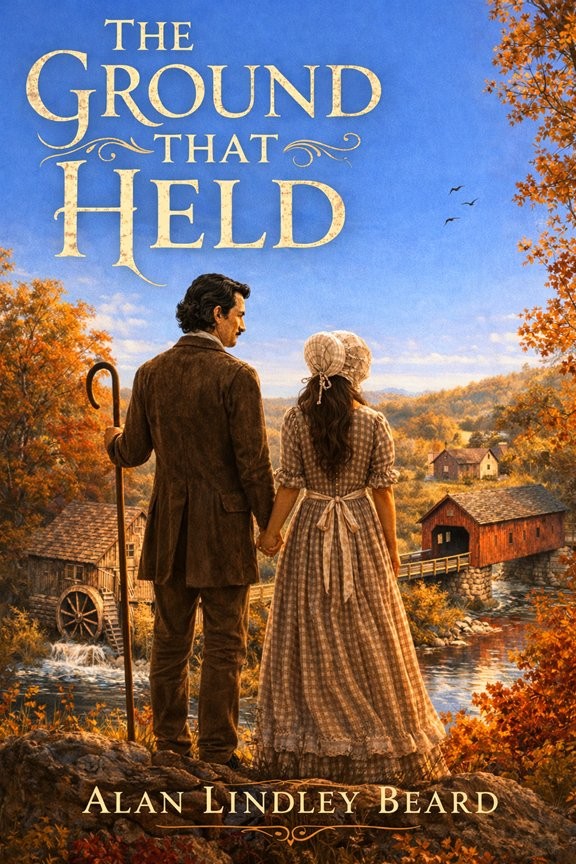
The Ground That Held

First-person narration by Rachael Cameron Poage Beard

Rachael — Jonas’s wife, Moffet’s mother, and the voice the trilogy has been moving toward from its first page — narrates the long century that includes the Civil War. The valley the first Bairds walked into as strangers is, by her telling, a settled country with its own churches and mills and graveyards, and with the full set of contradictions that a settled country in western Virginia carried by 1860.

The crook passes from Jonas to Moffet in these pages. In Chapter twenty-four, the marks Edwin cut into the shepherd’s crook are read at last, and what went unspoken for four generations is, for the first time, visible to one of his descendants. The novel — and the trilogy — closes on a family that now knows, in part, what it was.

Read Chapter One
Cover of The Ground That Held by Alan Lindley Beard


Built on documented genealogy — carried into the ground the record cannot reach.

The trilogy is fiction. The family is not. Thomas Beard of Augusta County, his son John of Renick’s Valley, his grandson Josiah Jonas Beard of the Locust Creek Plantation, and his great-grandson James Henry Moffet Beard of Pocahontas County — all are documented in census, deed, will, and church record across two centuries.

Where the record speaks, the novels follow it. Where the record falls silent — as it does on Edwin Baird, the brother who came over with Thomas and was lost to history after Pennsylvania — the novels read the silence carefully and supply the rest. Oak Grove Church, which appears in Book Three, is a real congregation in Pocahontas County, West Virginia, and its own archives supplied much of that volume.

1718Ulster Departure
1747Beverly Manor
1770Renick’s Valley
5Generations
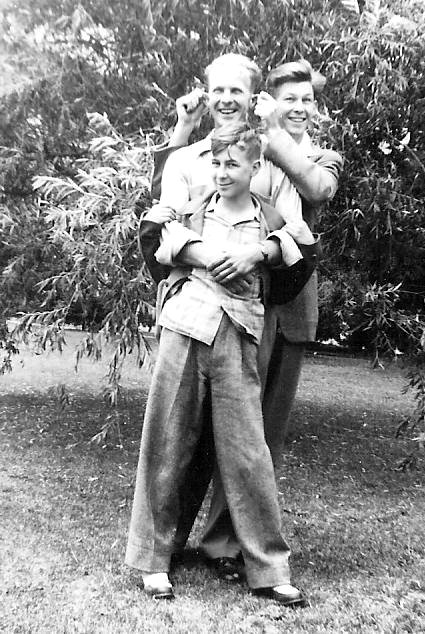
Archival family photograph
From the family archive
Ralph, Guy, and Ray Beard in Daniels, West Virginia
Ralph, Guy, and Ray Beard, Daniels WV

Alan Lindley Beard

Alan Lindley Beard is a ninth-generation descendant of John Baird of Ulster, whose sons Thomas and Edwin crossed from Ireland to Boston in 1718 and carried the family south into Augusta County, Virginia, and on to the Greenbrier headwaters. The trilogy — Under the Watch of the Rivers, The Road That Ends, and The Ground That Held — is the result of more than two decades of genealogical research carried into fiction.

The author maintains a separate research archive of family records, photographs, and source documents at the longstanding Beard family genealogy site, which the novels build upon and acknowledge throughout.

Forthcoming

Three volumes. One family.

The trilogy is in the final stages of production. Updates and publication details will be posted here as the books move toward release. To be notified directly, please write to the author.