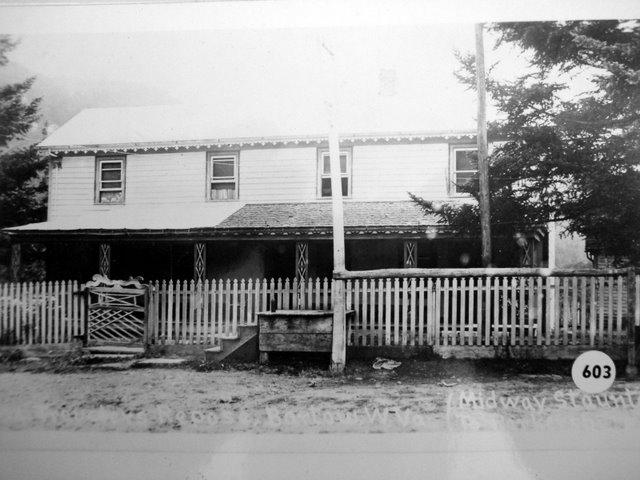
Traveler's Repose
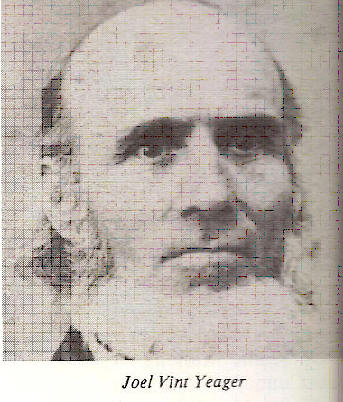
An interesting location that I found during my research was "Traveler's Repose". This was mentioned in the stories related to Josiah Osborne Beard (born April 29, 1847, near Lewisburg in Greenbrier County) the son of Samuel Beard and Margaret Ann (Knapp) Hutsopillar, who had been widowed at age 20 before marriage to Samuel Beard. He served in the Confederate Army in the Civil War and on October 6, 1986, he married Eveline Medora Yeager (who was called Evie by her husband, and had black eyes and hair, and looked like her mother). Eveline Medora Yeager was the daughter of John Yeager, the pioneer of Bartow and the first occupant of Traveler's Repose.
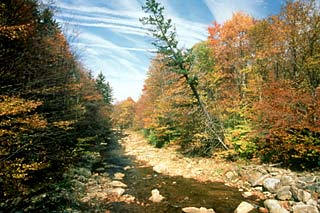
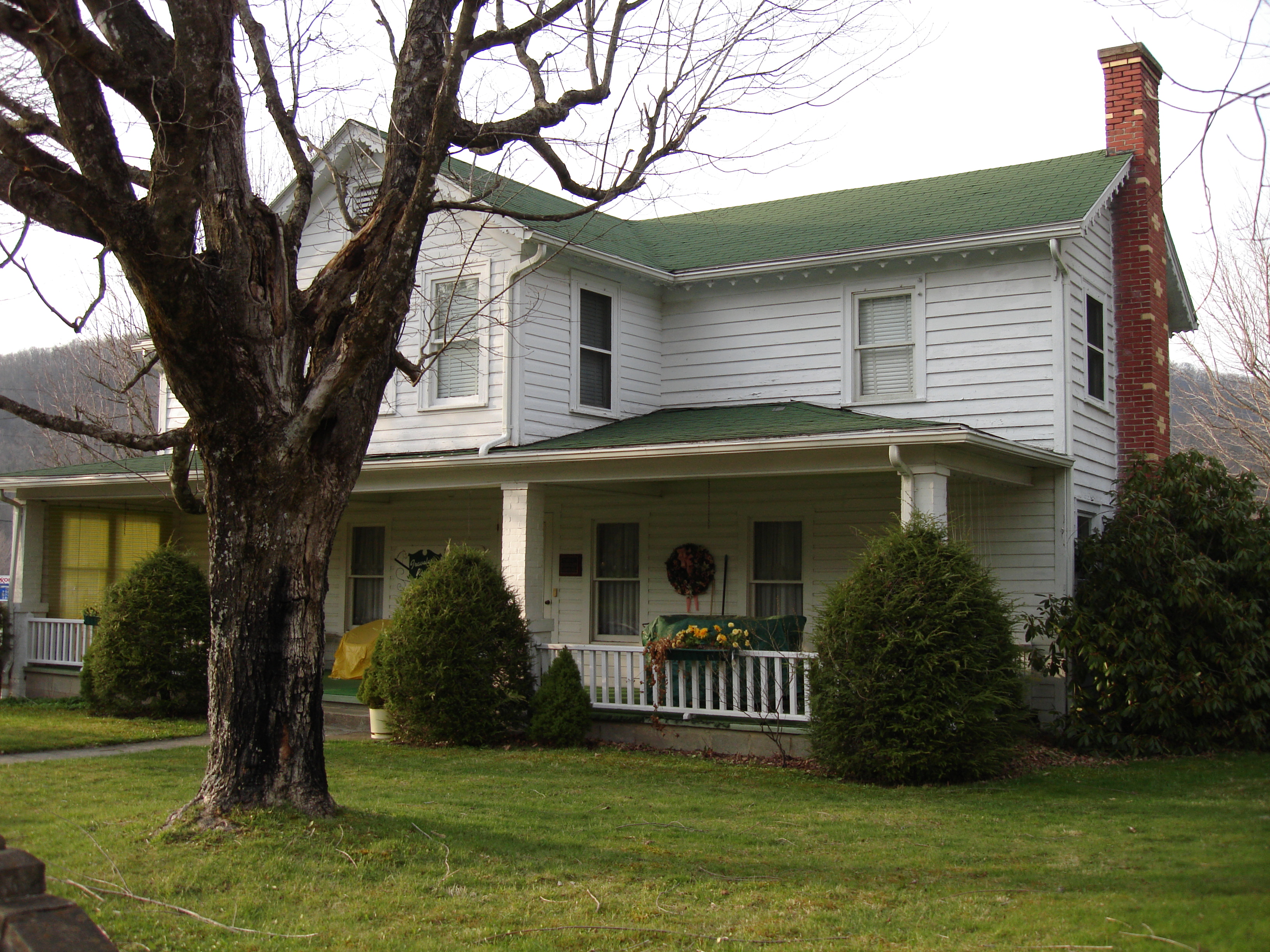
Traveler's Repose is located on the Staunton-Parkersburg Turnpike, and served as an Inn for Turnpike travelers, a Post Office, and later the telephone exchange for the valley. The original house was in the midst of the artillery fire during the Battle of Greenbrier River. Later in the Civil War, bushwhackers burned the house, and the new house was built upon the old foundations in 1869. The house is currently on private property with interpretive signs in the front, and is easily seen from the back way where one may park off the highway.
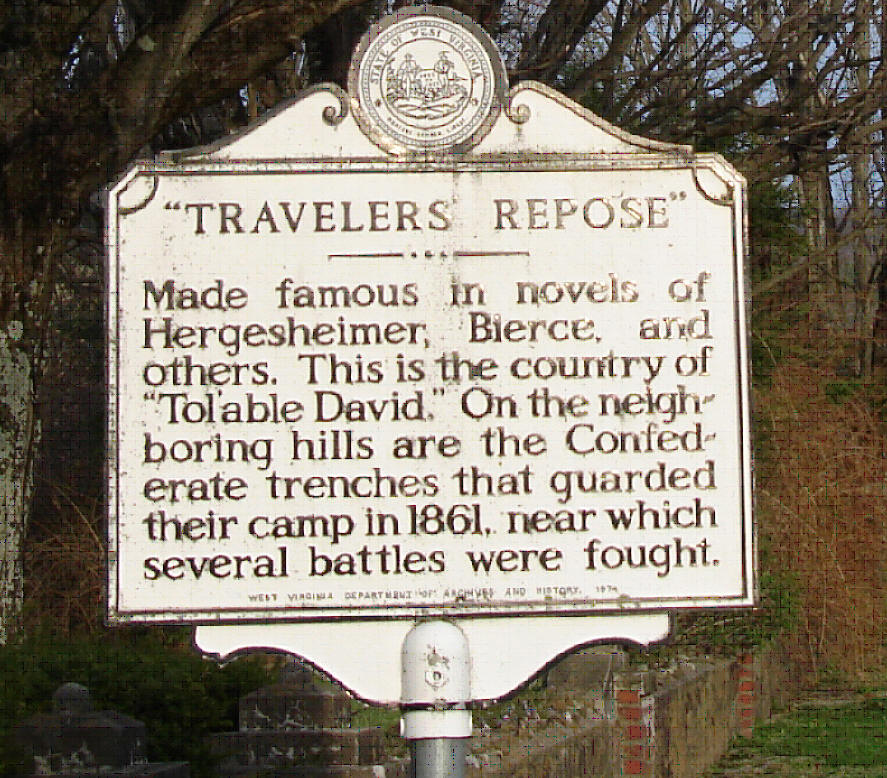
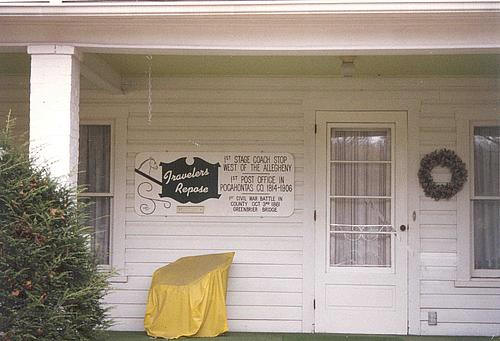 Traveler's repose
was made famous in novels of
Hergesheimer (Traveler's
Repose - published in the Saturday Evening Post on Apr 8, 1922), Ambrose
Bierce (A Bivouac to the Dead), and others. This is the country of "Tol'able
David", a story which was made into a silent movie (1921) by Hergesheimer.
On the neighboring hills are the Confederate trenches guarding their camp in
1861, near which several battles were fought.
Near here was Camp Bartow,
fortified by
Confederates in 1861. At
Greenbrier Bridge, an artillery duel was fought, Oct. 3, 1861. Battle of
Allegheny (8 Mi. E.) was fought, Dec. 13, 1861, between armies of Gen. W. L.
Jackson and Gen. R. L. Milroy
Traveler's repose
was made famous in novels of
Hergesheimer (Traveler's
Repose - published in the Saturday Evening Post on Apr 8, 1922), Ambrose
Bierce (A Bivouac to the Dead), and others. This is the country of "Tol'able
David", a story which was made into a silent movie (1921) by Hergesheimer.
On the neighboring hills are the Confederate trenches guarding their camp in
1861, near which several battles were fought.
Near here was Camp Bartow,
fortified by
Confederates in 1861. At
Greenbrier Bridge, an artillery duel was fought, Oct. 3, 1861. Battle of
Allegheny (8 Mi. E.) was fought, Dec. 13, 1861, between armies of Gen. W. L.
Jackson and Gen. R. L. Milroy
The story with Eveline Medora Yeager is told as follows : When Eveline was two years old, she was kidnapped, and when they discovered
she was missing, the family became alarmed because panthers were known to be in
th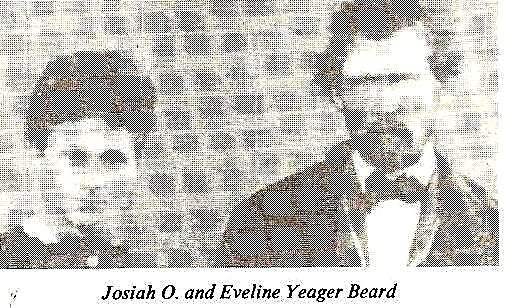 e area, but they soon found her along the road to Traveler's Repose. She
had been playing in the road in front of her home when either the driver or a
passenger on a stagecoach asked her if she wanted to go for a ride, and she had
reached up and had been taken. Each of the men tried to blame the other,
and it was never determined which was responsible. When young Eveline was
asked what had happened her only reply was that she had been "ridin in a waggy".
As a young girl she watched the
Battle of
Alleghany from the family home, which was hit by a hail of bullets during
the fighting. She saw the Confederate flag fall once and be raised again,
then, during a lull in the action, Colonel Baldwin took the family to his house
away from the battlefield for safety..
e area, but they soon found her along the road to Traveler's Repose. She
had been playing in the road in front of her home when either the driver or a
passenger on a stagecoach asked her if she wanted to go for a ride, and she had
reached up and had been taken. Each of the men tried to blame the other,
and it was never determined which was responsible. When young Eveline was
asked what had happened her only reply was that she had been "ridin in a waggy".
As a young girl she watched the
Battle of
Alleghany from the family home, which was hit by a hail of bullets during
the fighting. She saw the Confederate flag fall once and be raised again,
then, during a lull in the action, Colonel Baldwin took the family to his house
away from the battlefield for safety..
Additionally Traveler's Repose is mentioned in the biography of Brown Buren Beard, a descendent of Thomas Beard through his son John. Jessie Browne Beard Powell writes of her father:
When Papa was born on the upper Greenbrier on June 26, 1883, his uncle Brown
Yeager asked my grandmother to name the baby after him. Also, his uncle Adam
Martin Van Buren Arbogast made the same request. So the eighth child of Eveline
Yeager and Josiah Osborne Beard
was christened,
Brown Buren.
One of 13 children, Brown Buren was born in a log house, the old Yokum house
that stood in a field near the Winterburn church. At the time of his birth, the
post office for the area was Traveler’s Repose and his cousin Peter
Dilley was postmaster. When he was a small boy the family moved to Green Bank
near Bruffey School. Shortly thereafter, his father purchased the Jacob Gum farm
on the plateau that later became the site of NRAO.
His eight years of elementary education were at Mosley Flat and Bruffey,
one-room schools near Green Bank. Although he wanted to go to college and study
law, instead he helped his father farm and work in the lumber woods at Yeahoo
and Cheat Mt. until 1905, at which time he sold his inherited land to his
brother and built his first house at the newly founded town of Dunlevie.
On September 27, 1905, he married Nellie Blanche Gum, the youngest daughter of
Barbara Ann Riley and Robert Noah Gum at their home near Green Bank at eight
o’clock in the morning. Papa had stayed up all night before his wedding chopping
corn. He felt he could not leave his father in harvest season with work undone.
The newlyweds went by horse and buggy to Harrisonburg, VA for a two week
honeymoon.
Having a team of horses and a lot of physical strength – he was over 6 feet
tall, 180 pounds and 22 years old – he began as a drayman in Dunlevie. Shortly
he was hired by the Company to work in the store and post office and operate the
supply cars to the lumber camps.
After 6 years in Dunlevie, he sold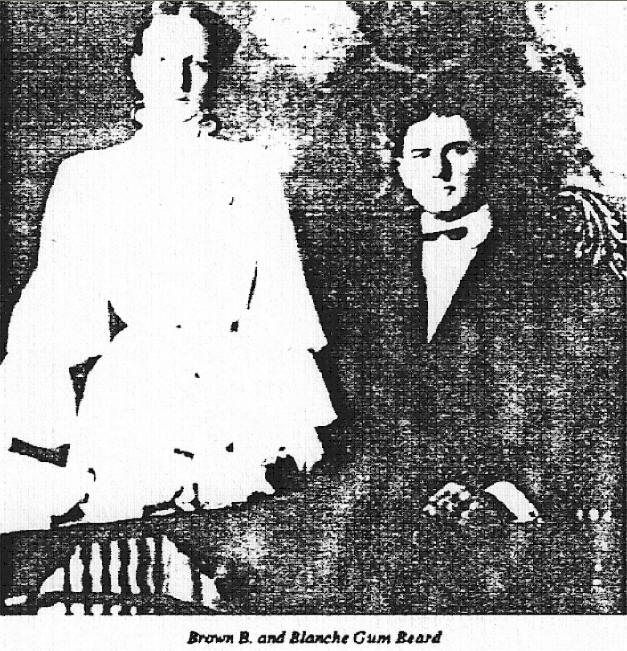 his house and lot and purchased in 1912, Traveler’s Repose, the property
of his pioneer ancestor, John Yeager. Her he lived, farmed, saw milled, retail
merchandized, and poll ticketed the remainder of his life.
his house and lot and purchased in 1912, Traveler’s Repose, the property
of his pioneer ancestor, John Yeager. Her he lived, farmed, saw milled, retail
merchandized, and poll ticketed the remainder of his life.
Beginning in 1916, he served Pocahontas County as deputy assessor, sheriff, and
then for 26 years as member and of times president of the County Court. He was
sheriff during the prohibition, and enjoyed chasing bootleggers as much as he
did foxes. He was a trustee of Bartow School. He gave generously of his time and
money to any worth while project. He worked diligently on many community
projects among them the restoration of the CCC camp and the addition to Bartow
church. There, at Camp Thornwood, a building bears his name.
As a child, Papa and I were inseparable. I never let him out of my sight. When I
bothered him too much he put my hands behind me and hand cuffed them, but I
still tagged along after him. He was a hard taskmaster. I couldn’t quit a job
assigned to me because I was tired, I stayed until I was finished. Often my
chore was to hitch 300 hay shocks in a day.
Since Papa was for so many years in public office, there was a never ending
stream of people to our house seeking his advice and help. He made himself
available no matter what time of day or night or the inconvenience. Once in a
blinding snow storm he brought two persons from the Sinks and five men from a
plane that was down in our meadow to our house and kept them for five days and
refused to accept pay. Always I have thought of him as a man who lived in a
house by the side of a road and truly a friend of man.
I asked some older neighbors what they thought of my father. One said “His word
was as good as his bond”. Another said he was the hardest worker he had ever
known. Yet another said “He was like a father to me”. All said he was honest and
a true lover of people, an
Abou Ben Adhem. He died Easter Sunday, April 6, 1969 and is buried in Arbovale on the plateau where he lived and grew to manhood.
My mother was a lifelong pillar of the Bartow Methodist church where she was
organist, teacher of teen age girls, and later the adults. She was born February
3, 1884 at the old Hartman-Bruffey house in Hevener’s mill near Green Bank. Only
two years old when her mother died, she developed early in life strong character
traits that carried her through, as she used to say “thick and thin”. No matter
what travail or adversity came her way, her philosophy was “This too will pass
away”. She was industrious, neat, patient, and devout. She was a true homebody.
Any time she spent outside her home was at church with the young people of the
community. She loved to go “bell-snickling”. No one ever suspected who she was.

Mamma adored her three grandchildren and had unlimited patience with them. She
was a strong healthy person who rarely experienced physical pain. Except for a
broken hip at 94 and a hospital contracted staff infection, she undoubtedly
would have been a centenarian. She died March 27, 1978 and is buried in the
Beard plot in Arbovale.
My cousin, Randolph Bledsoe, lived with us for many years. We were thereafter
like brother and sister. There was no child life for me, because some of my 50
first cousins where frequently visiting with us. In the lot beside our house we
played croquet everyday the weather permitted. Papa was always the winner. At
night there was a game of flinch,
authors, or carom with both of
my parents playing.
When I left for school in 1932 my folks were lonely and again Traveler’s
Repose became an Inn, sleeping 16 persons. It was operated as a tourist home
until 1962. Many of the guests became life long friends and come even now to
visit.
Papa and Mamma had two children; Virginia Raine born Nov 29, 1906; died Aug 1,
1907; Jessie Browne, born May 6 1915. The three grandchildren are Susan
Elizabeth Powell Leister (10-5-46) of Chicago, IL; Jane Beard Powell Nettles
(9-6-49) of Charlestown, WV; and Jessica Anne Brown Powell Cheatham (7-21-52) of
San Diego, CA.
The Sunnyside School was located on the cliffs on the Staunton to Parkersburg turnpike about one quarter mile west of the Bartow church where the spring comes from the Goodsell cemetery hill, this was the one room school for the Traveler's Repose Valley. Originally log, the building was later weather boarded. It served as a meeting place for the entire valley and church services were held there until Traveler's Repose Methodist Church was built on River Hill in 1883-85. Until 1905 the teachers boarded at the old Traveler's Repose Inn, and after that at the home of Charles Cameron Burner or P. M. Yeager. Among the known teachers are : Charles Edward Pritchard, Grace Huff, Aaron Sharp, father of Dr. Roland P. and Leona Pennybacker. Charles Edward boarded at the home at the inn and married Malcena, the daughter of Peter Dilley Yeager. Gracie Joe Hill married the innkeeper's son, William Jacob Yeager.
Traveler's Repose is the subject of "A Bivouac of the Dead" by the famous author Ambrose Bierce, who writes:
Away up in the he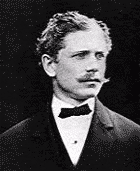 art of the Allegheny mountains, in Pocahontas county, West
Virginia, is a beautiful little valley through which flows the east fork of the
Greenbrier river. At a point where the valley road intersects the old Staunton
and Parkersburg turnpike, a famous thoroughfare in its day, is a post office in
a farm house. The name of the place is Travelers' Repose, for it was once a
tavern. Crowning some low hills within a stone's throw of the house are long
lines of old Confederate fortifications, skillfully designed and so well
preserved that an hour's work by a brigade would put them into serviceable shape
for the next civil war. This place had its battle--what was called a battle in
the "green and salad days" of the great rebellion. A brigade of Federal troops,
the writer's regiment among them, came over
Cheat mountain, fifteen miles to the
westward, and, stringing its lines across the little valley, felt the enemy all
day; and the enemy did a little feeling, too. There was a great cannonading,
which killed about a dozen on each side; then, finding the place too strong for
assault, the Federals called the affair a reconnaissance in force, and burying
their dead withdrew to the more comfortable place whence they had come.
art of the Allegheny mountains, in Pocahontas county, West
Virginia, is a beautiful little valley through which flows the east fork of the
Greenbrier river. At a point where the valley road intersects the old Staunton
and Parkersburg turnpike, a famous thoroughfare in its day, is a post office in
a farm house. The name of the place is Travelers' Repose, for it was once a
tavern. Crowning some low hills within a stone's throw of the house are long
lines of old Confederate fortifications, skillfully designed and so well
preserved that an hour's work by a brigade would put them into serviceable shape
for the next civil war. This place had its battle--what was called a battle in
the "green and salad days" of the great rebellion. A brigade of Federal troops,
the writer's regiment among them, came over
Cheat mountain, fifteen miles to the
westward, and, stringing its lines across the little valley, felt the enemy all
day; and the enemy did a little feeling, too. There was a great cannonading,
which killed about a dozen on each side; then, finding the place too strong for
assault, the Federals called the affair a reconnaissance in force, and burying
their dead withdrew to the more comfortable place whence they had come.
 Those
dead now lie in a beautiful national cemetery at Grafton, duly registered, so
far as identified, and companioned by other Federal dead gathered from the
several camps and battlefields of West Virginia. The fallen soldier (the word
"hero" appears to be a later invention) has such humble honors as it is possible
to give.
Those
dead now lie in a beautiful national cemetery at Grafton, duly registered, so
far as identified, and companioned by other Federal dead gathered from the
several camps and battlefields of West Virginia. The fallen soldier (the word
"hero" appears to be a later invention) has such humble honors as it is possible
to give.
His part in all the pomp that fills
The circuit of the Summer hills
Is that his grave is green.
True, more than a half of the green graves in the Grafton cemetery are marked
"Unknown," and sometimes it occurs that one thinks of the contradiction involved
in "honoring the memory" of him of whom no memory remains to honor; but the
attempt seems to do no great harm to the living, even to the logical.
A few hundred yards to the rear of the old Confederate earthworks is a wooded
hill. Years ago it was not wooded. Here, among the trees and in the undergrowth,
are rows of shallow depressions, discoverable by removing the accumulated forest
leaves. From some of them may be taken (and reverently replaced) small thin
slabs of the split stone of the country, with rude and reticent inscriptions by
comrades. I found only one with a date, only one with full names of man and
regiment. The entire number found was eight.
In these forgotten graves rest the Confederate dead--between eighty and one
hundred, as nearly as can be made out. Some fell in the "battle;" the majority
died of disease. Two, only two, have apparently been disinterred for reburial at
their homes. So neglected and obscure is this
campo santo that only he upon
whose farm it is--the aged postmaster of Travelers' Repose (Ed. note :
this could have been John Yeager, or Brown Buren Beard)--appears to know
about it. Men living within a mile have never heard of it. Yet other men must be
still living who assisted to lay these Southern soldiers where they are, and
could identify some of the graves. Is there a man, North or South, who would
begrudge the expense of giving to these fallen brothers the tribute of green
graves? One would rather not think so. True, there are several hundreds of such
places still discoverable in the track of the great war. All the stronger is the
dumb demand--the silent plea of these fallen brothers to what is "likens God
within the soul."
They were honest and courageous foemen, having little in common with the
political madmen who persuaded them to their doom and the literary bearers of
false witness in the aftertime. They did not live through the period of
honorable strife into the period of vilification--did not pass from the iron age
to the brazen--from the era of the sword to that of the tongue and pen. Among
them is no member of the Southern Historical Society. Their valor was not the
fury of the non-combatant; they have no voice in the thunder of the civilians
and the shouting. Not by them are impaired the dignity and infinite pathos of
the Lost Cause. Give them, these blameless gentlemen, their rightful part in all
the pomp that fills the circuit of the summer hills.
Traveler's Repose is also the subject of Louise McNeill's poems of the busy turnpike and the famous tavern after the Civil War:
Jed Kane
"The Gauley mail was overdue, When Jed who was to drive it through, Cheat Mountain Pass to Staunton Run, Got special word from Washington, In which a postal clerk inquired, Why Mr. Kane had been hired, To drive the course at post haste rate, Was not in yet, though three months late.
"And now on a high-glaze marble wall, In the postal building Jed Kane's
scrawl, Hangs framed in silver" Respected Sir, You ask the reason and this be
her -- If the gable and blew out of hell, Straight into the drifts of a snow
that fell, Last fall on the ram's horn
 point
of Cheat, It would take till Easter for brimstone heat, To melt a horsepath, So
I remain, Your obdt. svt. Jedson Kane.
point
of Cheat, It would take till Easter for brimstone heat, To melt a horsepath, So
I remain, Your obdt. svt. Jedson Kane.
The Inn
"At dusk the rider raised his horse, The mail man left his post haste course, A traveler who walked alone, Scraped muddy boots upon a stone, The harder drove his steers to pen, And four bespattered, glib-tongued men, Who had not met, met now before, The tavern's heavy timbered door.
"The fire roared loud as songs were sung, The cider keg popped out its bung, And flowed along the stream of wit; Wild pheasant roasted on the spit; and till the crossroads streak with dawn, And four strange men must travel on; A long-jawed gaffer, Henry Clay, A dark outlander, "French" Crozet, Windy Williams who drove for hire, and Jed who carried the Staunton Mails, Warmed their shins by the landlord's fire, Swigged their cider and swapped their tales.".
For some further reading, see The Battle of the Allegheny Mountain, 1861 and The Battle of Droop Mountain, 1863.
Traveler's Repose, taken April 2007
Traveler's Repose - Circa 1900